
The Silicon Valley Secret to Breaking Phone Addiction
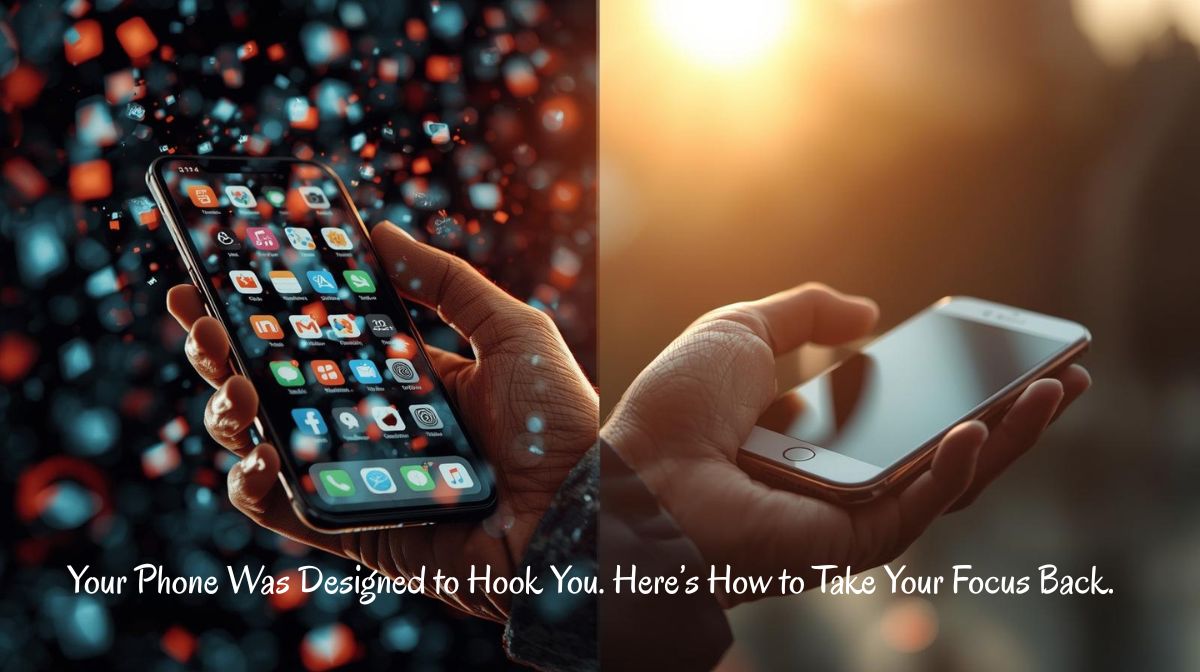
(And Why Digital Detoxes Usually Fail)
Introduction: The Wake-Up Scroll
The average adult checks their phone over 90 times a day.
Teenagers? Closer to 150.
And most of us touch our phones before our feet hit the floor in the morning.
If you’ve ever picked up your phone “just to check one thing” and resurfaced 47 minutes later wondering where your life went—this post is for you.
Here’s the part no one tells you:
Your lack of willpower isn’t the problem.
Michael Reeves’ Story: When the Creator Becomes the Addict
Michael Reeves (name changed for privacy) was a software developer in Silicon Valley. His job? Designing apps that kept people engaged.
Push notifications. Infinite scroll. Reward loops.
He helped build them all.
And then… they worked.
On him.
Michael found himself waking up at night to check notifications that didn’t exist. He struggled to focus, felt constantly overstimulated, and couldn’t sit through a conversation without itching for his phone.
That’s when he realized something important:
Phone addiction isn’t a personal failure—it’s a designed outcome.
And the same science used to trap attention can also be used to set it free.
That’s the insider solution we’re talking about today.
How Apps Are Designed to Be Addictive (Psychological Tricks Revealed)
Apps don’t want your time.
They want your attention loops.
Here are just a few tricks Silicon Valley uses:
🔁 Variable Rewards
Your brain loves unpredictability.
Likes, comments, messages—sometimes you get them, sometimes you don’t. That uncertainty keeps you checking, just like a slot machine.
🧠 Dopamine Hijacking
Every swipe, refresh, or notification releases a small hit of dopamine—the brain’s “anticipation” chemical. Not pleasure. Craving.
♾ Infinite Scroll
No stopping point = no natural exit cue. Your brain never hears “we’re done.”
🔔 Artificial Urgency
Red badges. Buzzes. Alerts.
Your nervous system reads them as threats, not information.
Once you see this, it’s hard to unsee it.
Why Typical Digital Detox Methods Fail
You’ve probably tried one (or all) of these:
-
Deleting apps
-
Turning your phone grayscale
-
Weekend “phone fasts”
-
Locking your phone in a drawer
They work… briefly.
Then Monday comes. Life happens. And the phone sneaks right back in.
Here’s why most digital detoxes fail:
❌ They rely on willpower
❌ They ignore habit loops
❌ They don’t rewire the brain
❌ They treat the phone as the enemy—not the system
You don’t need more discipline.
You need a better structure.
The Neuroscience Behind Phone Addiction*
Phone addiction activates the same brain circuits as gambling and sugar:
-
Cue: Notification, boredom, stress
-
Craving: “Just one check”
-
Response: Scroll, tap, swipe
-
Reward: Dopamine release
Your brain learns this loop fast.
Breaking it requires more than deleting an app—it requires interrupting and replacing the loop.
And that’s where things finally get interesting.
The “Digital Declutter” Approach: Using Addiction Science in Reverse
Instead of fighting your brain, the Digital Declutter method works with it.
This approach was developed by former tech insiders and behavioral scientists who understood one key truth:
You don’t break habits. You replace them.
What Makes This Different?
✔ No extreme detox
✔ No flipping your life upside down
✔ No tech shame
✔ No “just try harder” mindset
Instead, it focuses on:
-
Reducing triggers (not eliminating tech)
-
Creating intentional friction
-
Rebuilding focus gradually
-
Reclaiming dopamine from real life
Think of it as decluttering your attention, not your phone.
Real Transformations: What Happens When the Noise Stops
People who follow this approach often report:
-
📉 Screen time reduced by 40–60%
-
😌 Less anxiety and mental fatigue
-
💤 Better sleep within the first week
-
🧠 Improved focus and memory
-
❤️ More presence with family and friends
One participant shared:
“I didn’t realize how overstimulated I was until the quiet came back. I feel like I got my brain back.”
That’s the goal—not restriction, but relief.
What’s Inside the 30-Day Digital Declutter System
This is where structure meets simplicity.
Digital Declutter: The 30-Day Plan is designed to gently reset your relationship with your phone—without quitting technology or disappearing from modern life.
Inside the System:
✅ Daily 10–15 minute action steps
✅ Neuroscience-based habit rewiring
✅ Phone setup guides (what to change & why)
✅ Focus restoration exercises
✅ Dopamine reset techniques
✅ Stress-reduction tools
✅ Simple routines you’ll actually keep
Bonuses Included:
🎁 Focus Reset Workbook
🎁 “Calm Mornings” Phone-Free Routine
🎁 Emergency Scroll-Stop Protocol
🎁 Lifetime access to updates
👉 Access the complete system here:
Digital Declutter: The 30-Day Plan
Why Now? (Flash Sale Details)
For a limited time, the full 30-Day Digital Declutter System is available at a deep discount.
Normally priced at $97, it’s currently available for under $40.
That’s less than:
-
One therapy session
-
One productivity app subscription
-
One month of stress scrolling your life away
👉 Claim the flash sale here:
Digital Declutter: The 30-Day Plan
The 60-Day Guarantee (Zero Risk)
Try the system for 60 full days.
If you don’t:
-
Feel more focused
-
Use your phone with intention
-
Experience less mental noise
You get 100% of your money back.
No questions. No hoops.
👉 Start risk-free here:
Digital Declutter: The 30-Day Plan
Final Thought: This Isn’t About Quitting Phones
Phones aren’t evil.
But unconscious use is exhausting.
The real goal isn’t less technology—it’s more life.
More presence.
More clarity.
More quiet moments that don’t need filling.
If Silicon Valley figured out how to capture attention, it only makes sense to use that same knowledge to take it back.
👉 Reclaim your focus here:
Digital Declutter: The 30-Day Plan
*"This information is for educational purposes only and is not intended as medical or therapeutic advice for addiction. Individual results may vary based on effort and consistency. This system is designed to complement, not replace, professional addiction treatment or mental health care. If you're experiencing severe technology addiction or related mental health concerns, please consult with a qualified healthcare provider. The techniques mentioned have been tested with thousands of individuals, but everyone's experience is unique."
I may receive compensation if you purchase through links on this page, at no additional cost to you. I only recommend products that provide genuine value.